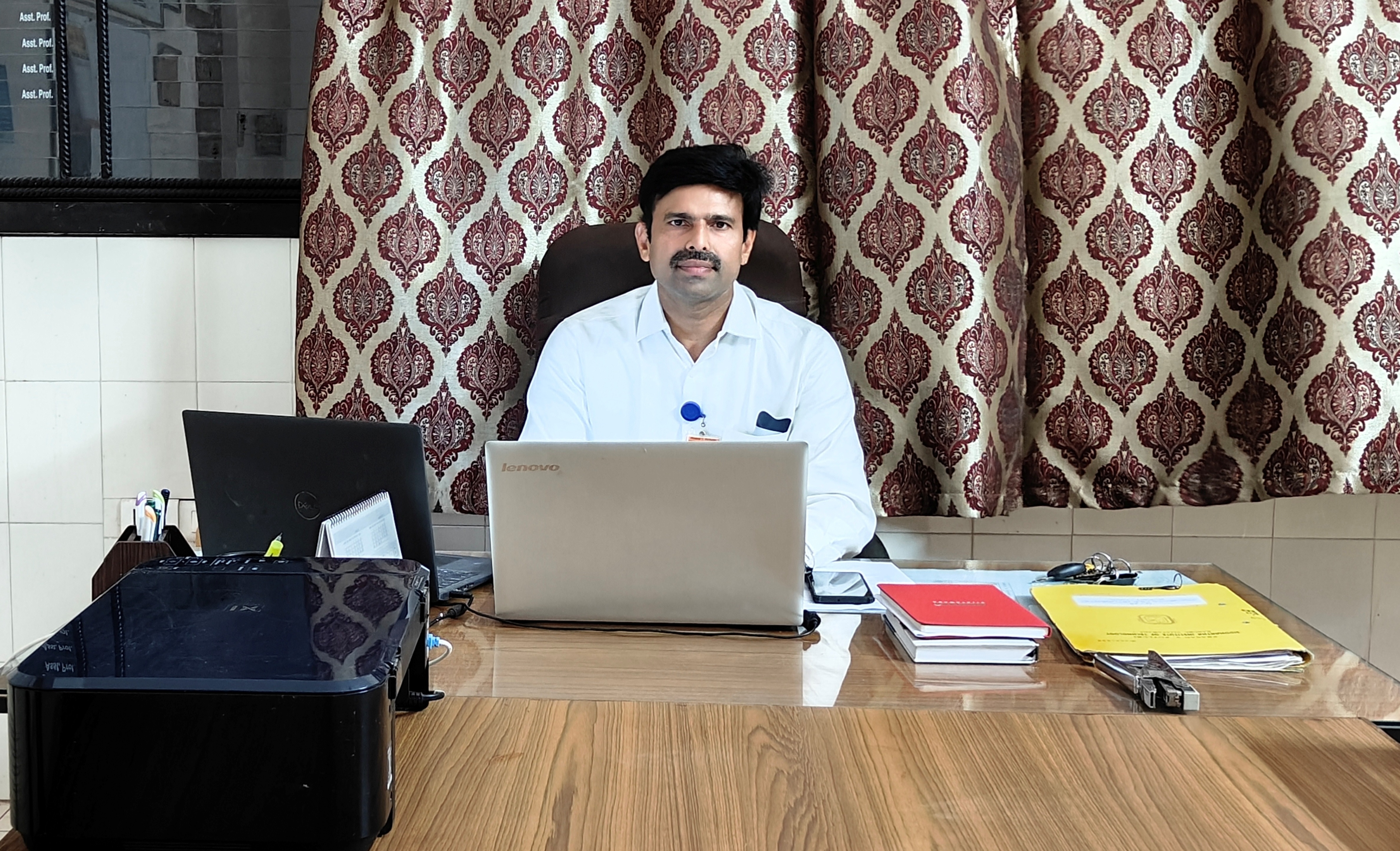
Dr. V. Jagadish
Professor, HoD of Civil Engineering Department
M.Tech(Construction Technology), Ph.D.

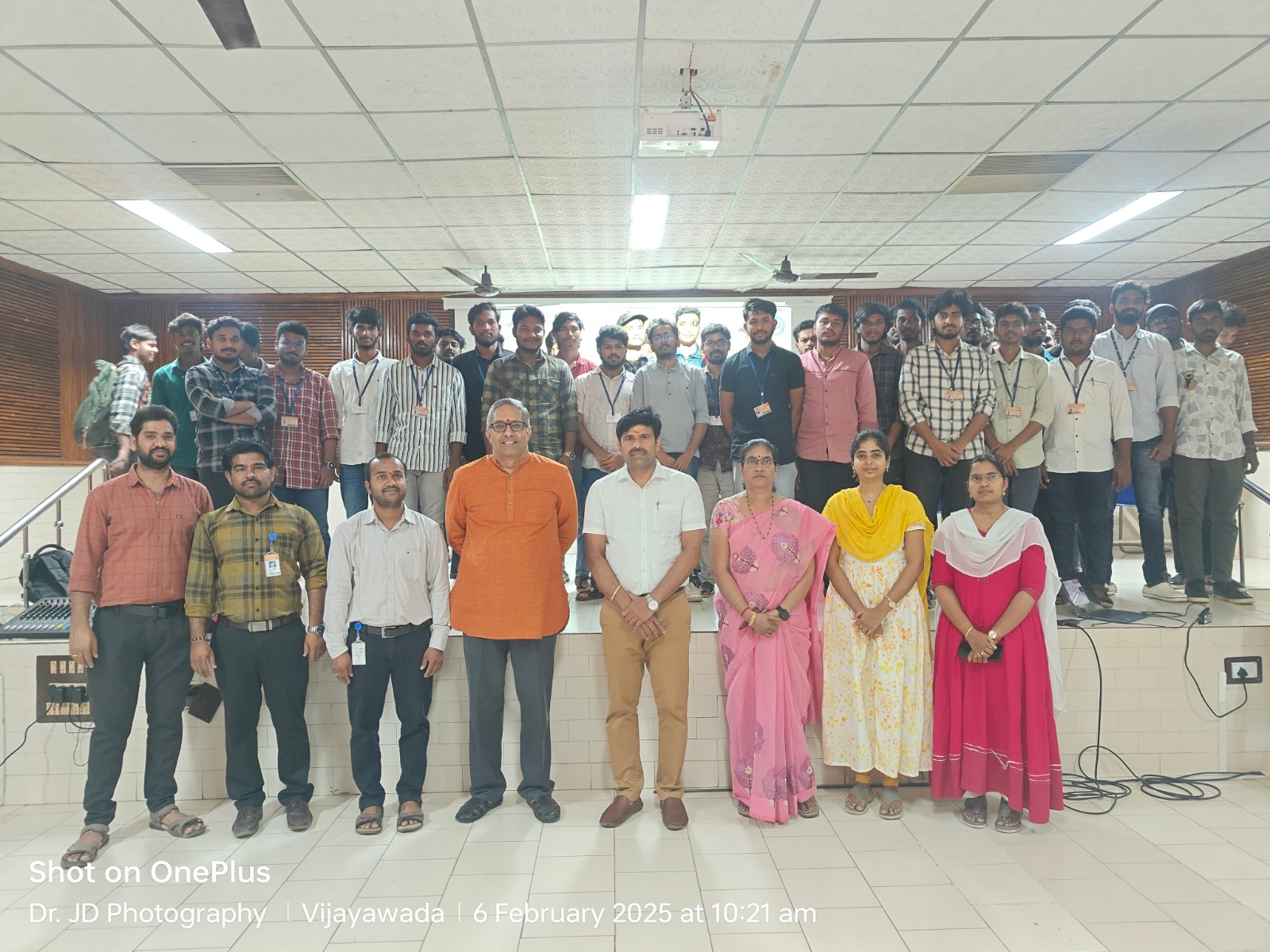
Staff of Department of CIVIL Engineering
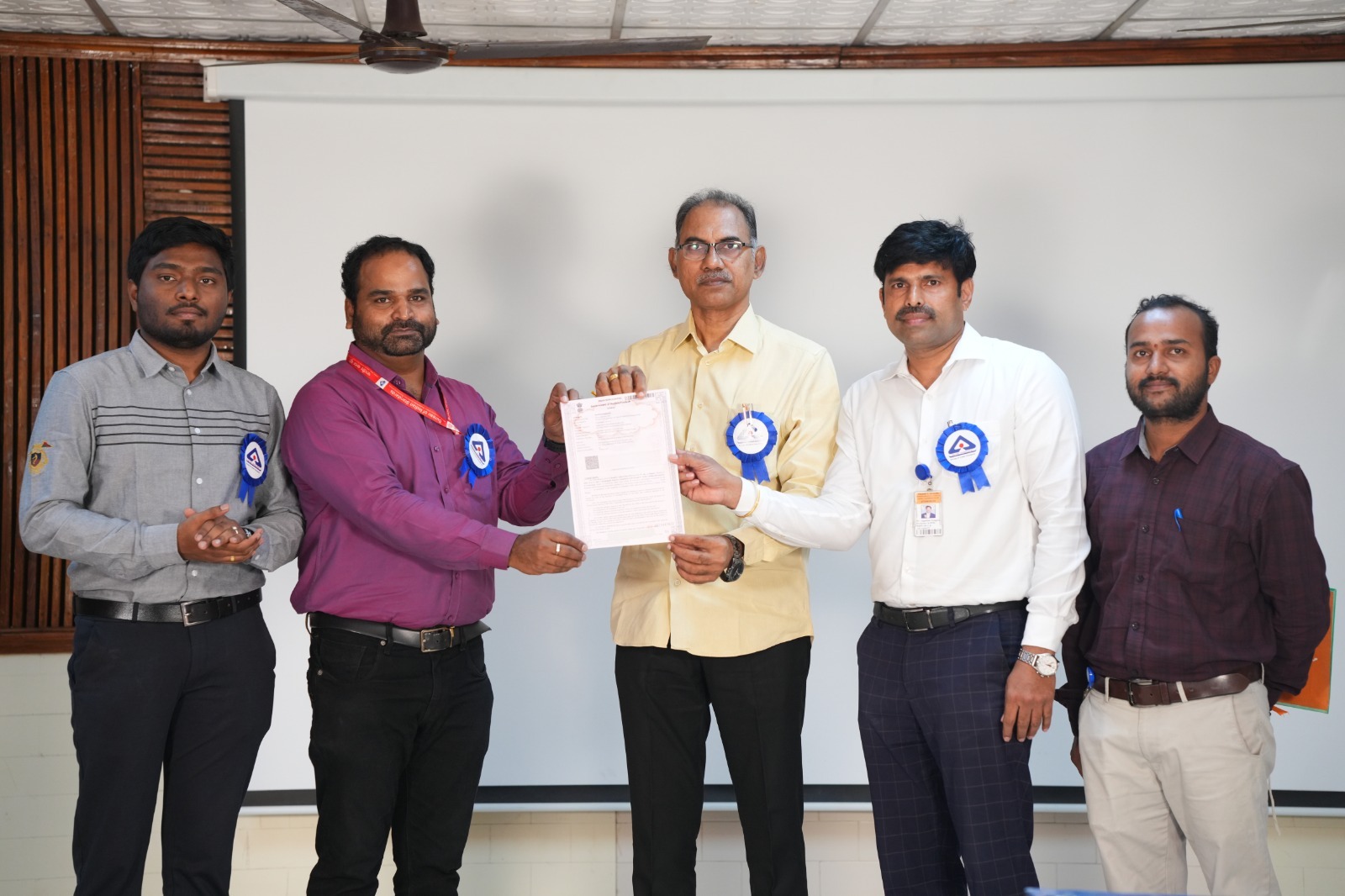
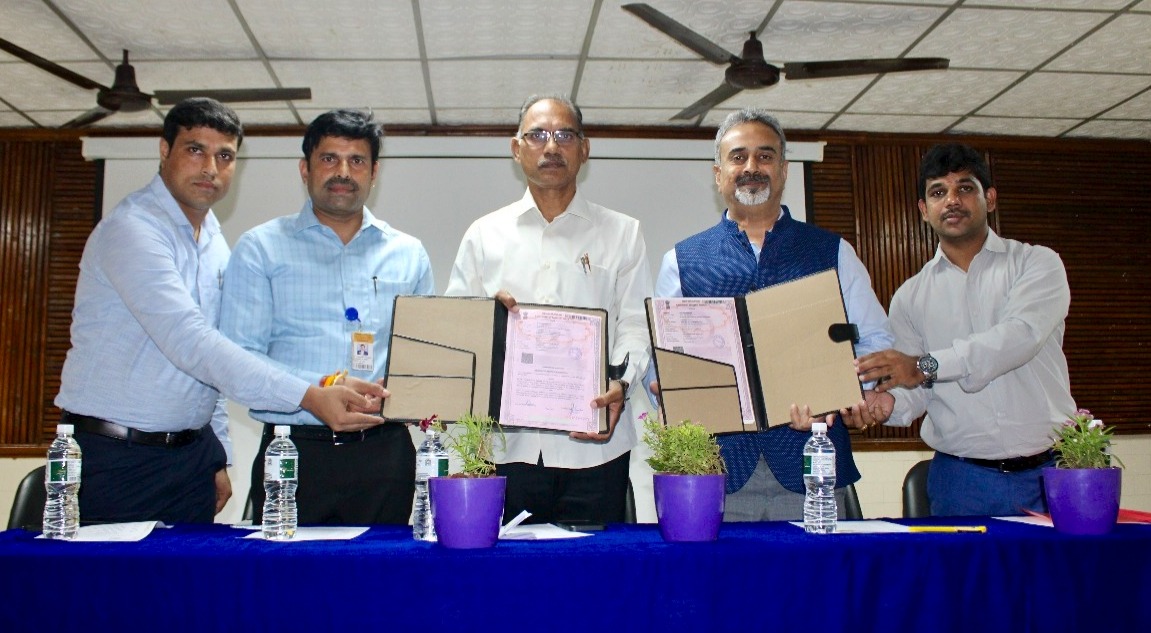
MOU with BIS

The Department of Civil Engineering at Prasad V. Potluri Siddhartha Institute of Technology (PVPSIT), established in 2008, offers a B.Tech programme in Civil Engineering. As one of the core engineering disciplines, the department combines strong fundamental knowledge with modern technologies to prepare graduates for careers in construction, infrastructure development, public sector organizations, and allied industries.
The department has been accredited by the National Board of Accreditation (NBA) for three consecutive terms—Tier II (2016–2019), Tier I (2019–2022), and Re-accredited (2022)—demonstrating sustained academic quality and robust outcome-based education practices.
To date, the department has produced over 900 graduates across fourteen batches and is supported by a team of 13 qualified faculty members, comprising 2 Professors and 11 Assistant Professors, including 8 Ph.D. holders and 3 faculty members pursuing doctoral research, along with experienced technical and non-teaching staff. Spanning a total area of 1470 sq. m, the department is equipped with eight well-established laboratories—Concrete Technology, Transportation Engineering, Geotechnical Engineering, Environmental Engineering, Survey, Geology, Hydraulic Engineering, Computer-Aided Design. The total worth of laboratory equipment is more than ₹1.29 crore.
To enhance academic exposure and professional preparedness, the department has introduced structured enrichment initiatives such as Weekend with Alumni, Bi-Weekly Tech Talks with Industry Experts, and Monthly Sessions with IIT/NIT Professors. During A.Y. 2024–2025, more than 55 sessions were conducted, and these initiatives have continued in A.Y. 2025–2026, featuring experts from leading IITs and industry, thereby strengthening industry–academia–alumni engagement.
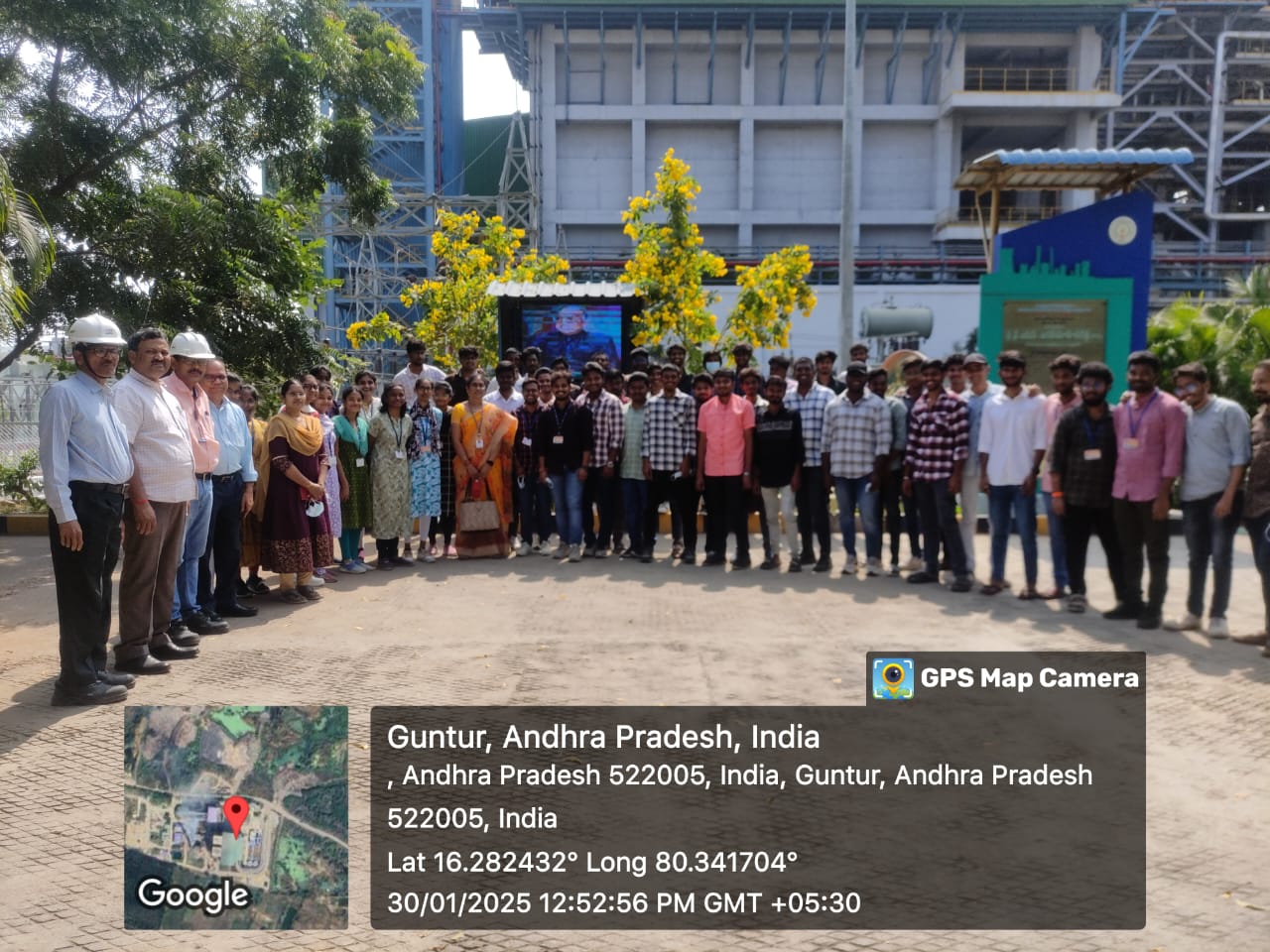
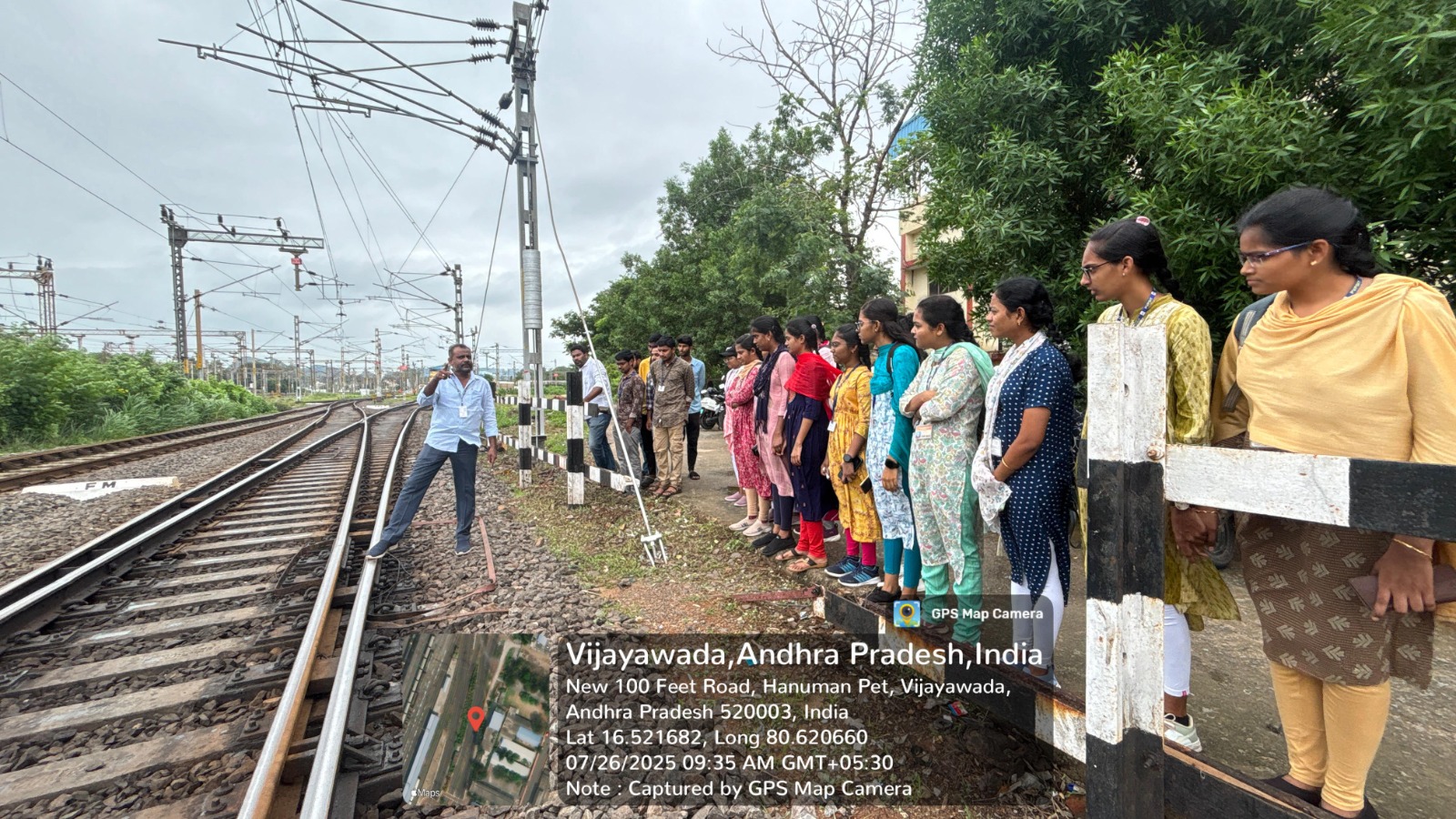
The department actively promotes research, consultancy, and industry collaboration. From A.Y. 2021–2022 to A.Y. 2024–2025, faculty members have published 58 research papers in reputed journals and conferences, and the department has generated over ₹38 lakhs in consultancy revenue across structural, material testing, transportation, environmental, and geotechnical engineering domains. Strong industry linkages are maintained through MoUs with reputed organizations such as NHAI–Vijayawada, Jindal Urban Waste Management Ltd., IGBC, CMTI–Bangalore, and leading design and construction firms. Students are encouraged to participate in internships, industrial visits, certification programmes, APSSDC training, NPTEL courses, and professional society activities through ICI and ISTE chapters.
Further strengthening industry–academia collaboration, the department established a Centre of Excellence (CoE) in collaboration with UltraTech Cement Limited during A.Y. 2024–2025. Housed in the Concrete Technology Laboratory, the CoE focuses on sustainable construction practices and advanced concrete technology, supporting research, innovation, and experiential learning through innovative concrete samples, rainwater harvesting and permeable concrete demonstrations, new-age building materials, and cement raw material displays.
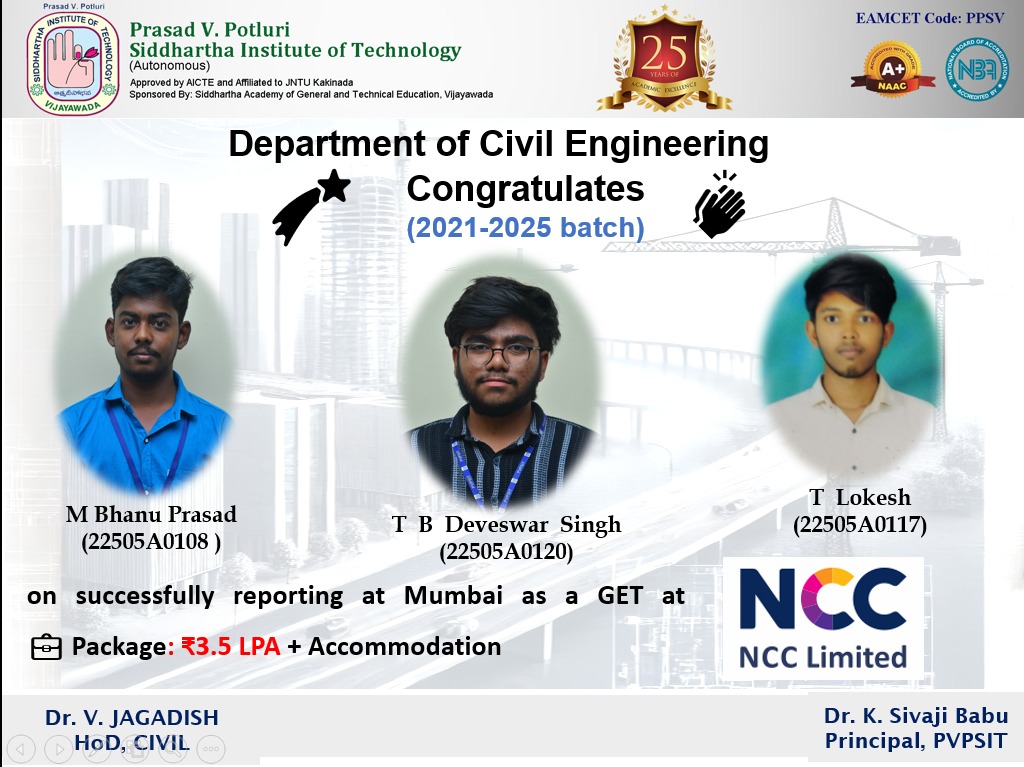
Through a strong emphasis on quality education, research excellence, industry collaboration, and continuous skill development, the Department of Civil Engineering at PVPSIT is committed to producing competent, ethical, and industry-ready civil engineers capable of contributing effectively to sustainable infrastructure development and societal progress.
The Department of Civil Engineering will provide quality education on par with the premier organizations of the country so that our students become leaders in education, industry and governance. Department strives to attain national recognition in research, teaching and professional service ensuring sustainability to various upcoming developments in the society at the regional and national scenario.
PEO-I: The graduates will have analytical and experimental abilities and design capabilities in Civil Engineering career.
PEO-II: The graduates will have good scientific and engineering domain to play an appropriate role in multidisciplinary professional activities with effective communicative skills to provide integrated and sustainable solutions for engineering problems.
PEO-III: The graduates will have attitude for lifelong learning and pursue higher education and research. Subsequently they will perform with engineering ethics and social responsibility in their professional career making use of state of art, modern tools and managerial skills.
PO - 1: Engineering knowledge: Apply the knowledge of mathematics, science, engineering fundamentals, and an engineering specialization to the solution of complex engineering problems.
PO - 2: Problem analysis: Identify, formulate, review research literature, and analyze complex engineering problems reaching substantiated conclusions using first principles of mathematics, natural sciences, and engineering sciences.
PO - 3: Design/development of solutions: Design solutions for complex engineering problems and design system components or processes that meet the specified needs with appropriate consideration for the public health and safety, and the cultural, societal, and environmental considerations.
PO - 4: Conduct investigations of complex problems: Use research-based knowledge and research methods including design of experiments, analysis and interpretation of data, and synthesis of the information to provide valid conclusions.
PO - 5: Modern tool usage: Create, select, and apply appropriate techniques, resources, and modern engineering and IT tools including prediction and modeling to complex engineering activities with an understanding of the limitations.
PO - 6: The engineer and society: Apply reasoning informed by the contextual knowledge to assess societal, health, safety, legal and cultural issues and the consequent responsibilities relevant to the professional engineering practice.
PO - 7: Environment and sustainability: Understand the impact of the professional engineering solutions in societal and environmental contexts, and demonstrate the knowledge of, and need for sustainable development.
PO - 8: Ethics: Apply ethical principles and commit to professional ethics and responsibilities and norms of the engineering practice.
PO - 9: Individual and team work: Function effectively as an individual, and as a member or leader in diverse teams, and in multidisciplinary settings.
PO - 10: Communication: Communicate effectively on complex engineering activities with the engineering community and with society at large, such as, being able to comprehend and write effective reports and design documentation, make effective presentations, and give and receive clear instructions.
PO - 11: Project management and finance: Demonstrate knowledge and understanding of the engineering and management principles and apply these to one’s own work, as a member and leader in a team, to manage projects and in multidisciplinary environments.
PO - 12: Life-long learning: Recognize the need for, and have the preparation and ability to engage in independent and life-long learning in the broadest context of technological change.
PSO-1: Understanding: Graduates shall demonstrate sound knowledge in analysis, design, laboratory investigations and construction aspects of civil engineering infrastructure, along with good foundation in mathematics, basic sciences and technical communication.
PSO-2: Broadness and Diversity: Graduates will have a broad understanding of economic, environmental, societal, health and safety factors involved in infrastructural development, and shall demonstrate ability to function within multidisciplinary teams with competence in modern tool usage.
| UG Programme | B.Tech (CIVIL Engineering) |
| Year of Establishment | 2008 |
| Intake | 60 |
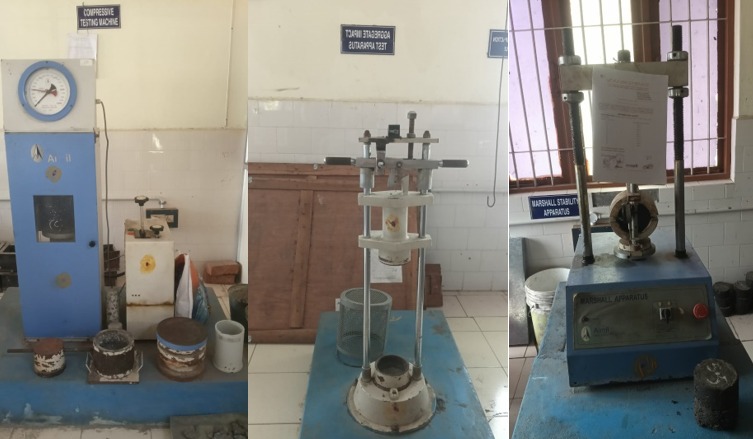
Transportation Engineering lab provides support in wide range of specialized areas of transportation engineering analysis and bitumen analysis and testing to the students.
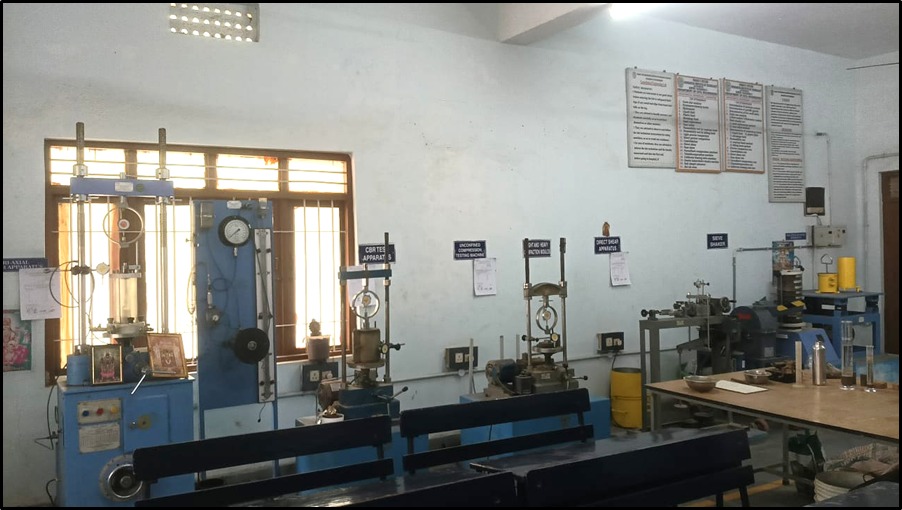
The Geotechnical Engineering deals with the study of the physical properties of soil in various natural and artificial environments and the behavior of soil masses subjected to various types of forces.
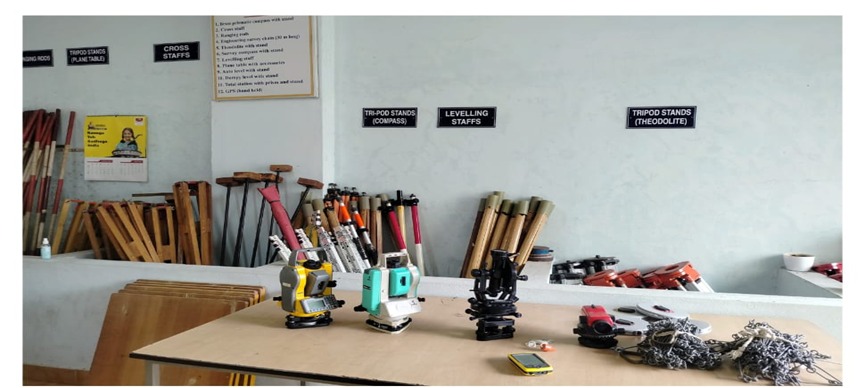
The Surveying Lab is used to introduce students to the concepts and practices of basic land surveying.
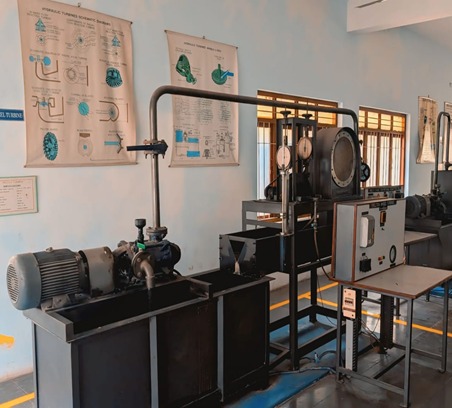
The Fluid Mechanics Laboratory is equipped to test and verify some of the principles of fluid flow
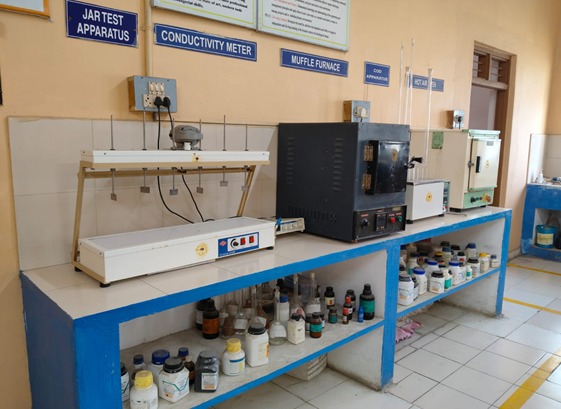
The Environmental Laboratory is primarily focused on chemical analysis of surface and groundwater samples.
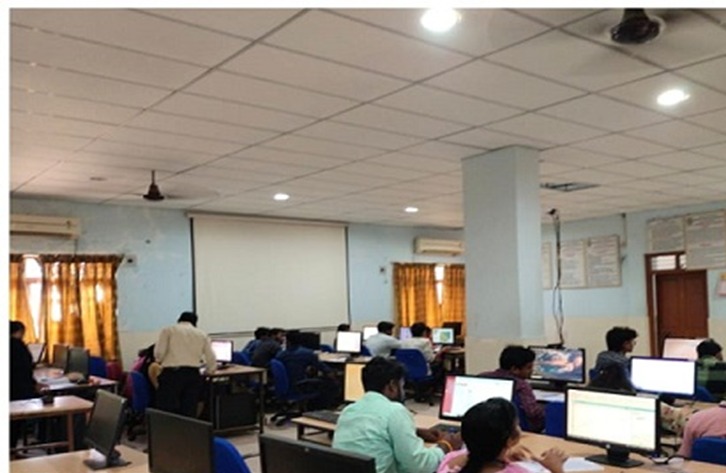
The use of CAD process provides enhanced graphics capabilities which allows any designer to Conceptualize his ideas.RS&GIS lab dealing with basic GIS topics using the software package ArcGIS and module dealing with Remote Sensing topics
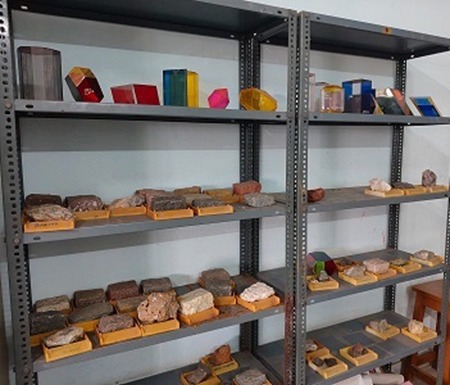
The identification of different types of rocks and understanding their behavior are the major objectives of geology laboratory.
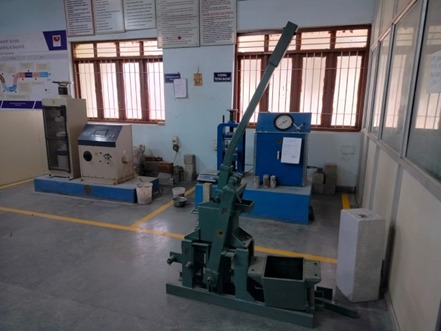
Concrete technology lab deals with the basic properties and methods of testing of cement, aggregates, paste, mortar, concrete.